
The Seaweed Consortium at J-AGRI Tokyo 2026
TSC joined J-AGRI Tokyo 2026 in Japan, bringing its work across seaweed cultivation, hatchery
technology, processing, and seaweed-derived bio-stimulants to a global agricultural audience.
Exploring where seaweed and agriculture meet
The programme takes a simple approach:
What happens when one of the world's most versatile marine resources meets the evolving
needs of modern agriculture?
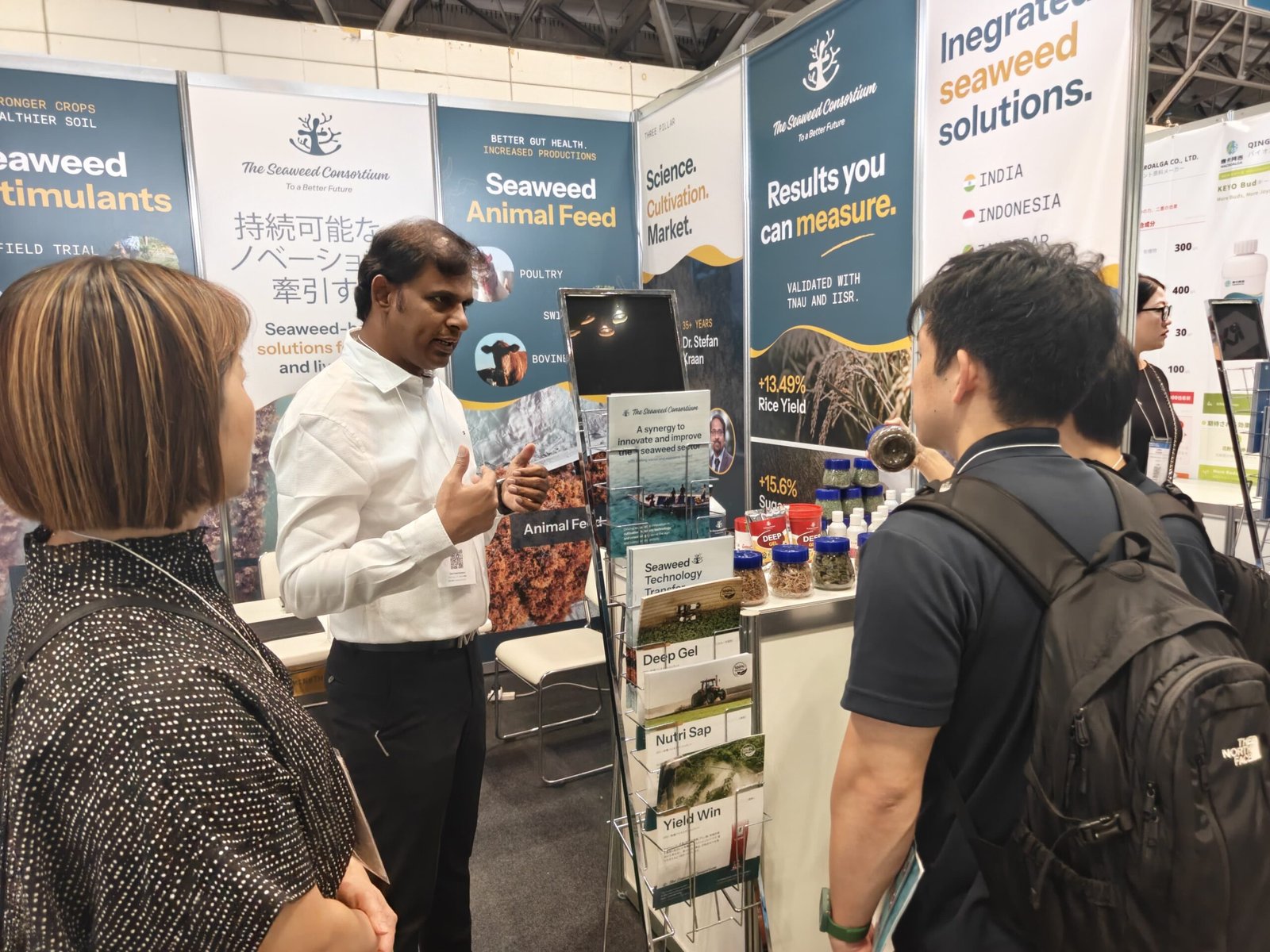
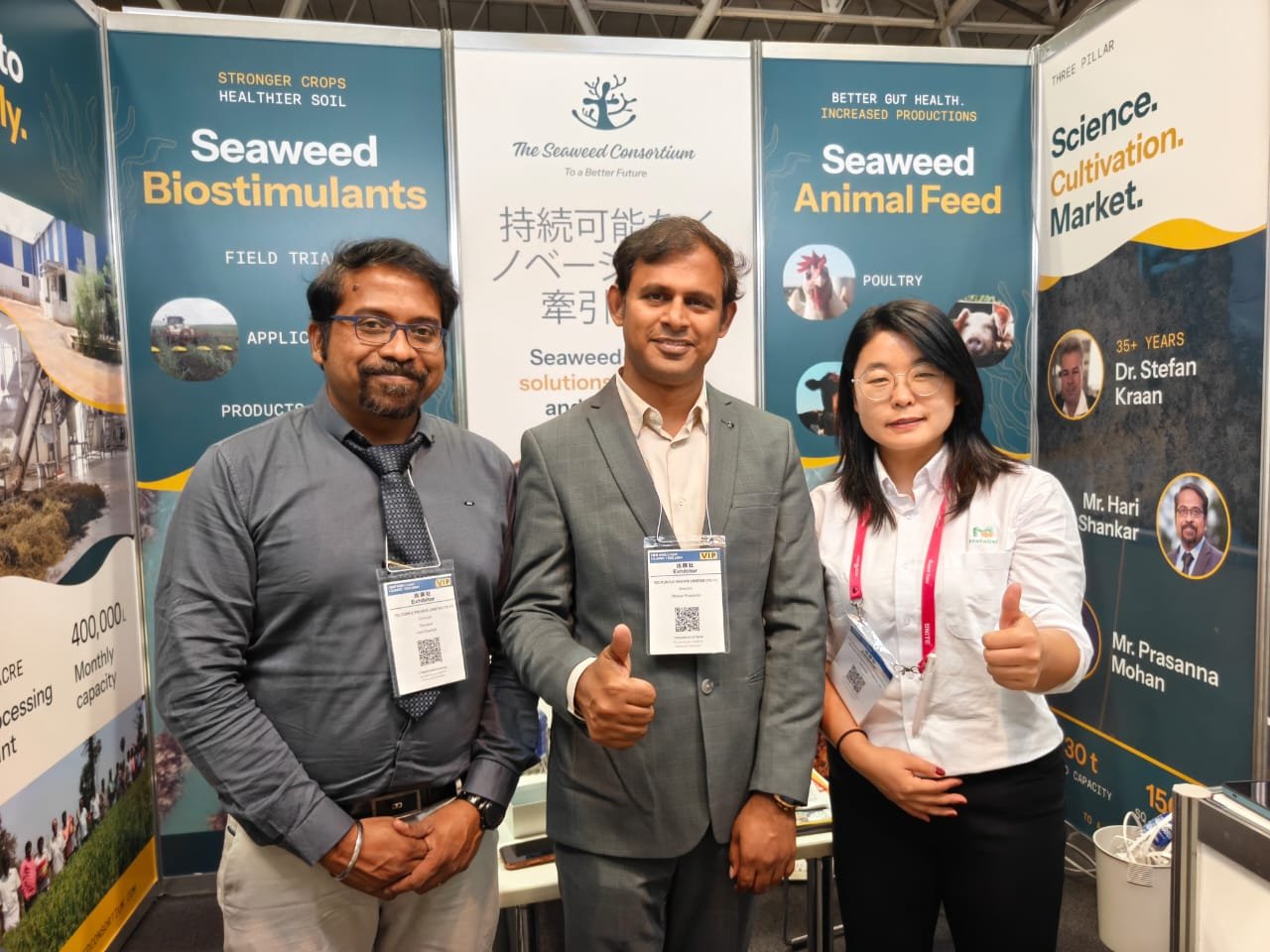
That was one of the questions at the heart of J-AGRI Tokyo 2026, where The Seaweed Consortium (TSC) brought its work in seaweed cultivation, hatchery technology, processing, and seaweed-derived bio-stimulants to the agricultural community in Japan.
Held from 7–9 October 2026 at Makuhari Messe, J-AGRI brought together businesses, producers, technology providers, and industry professionals from across the agricultural ecosystem.
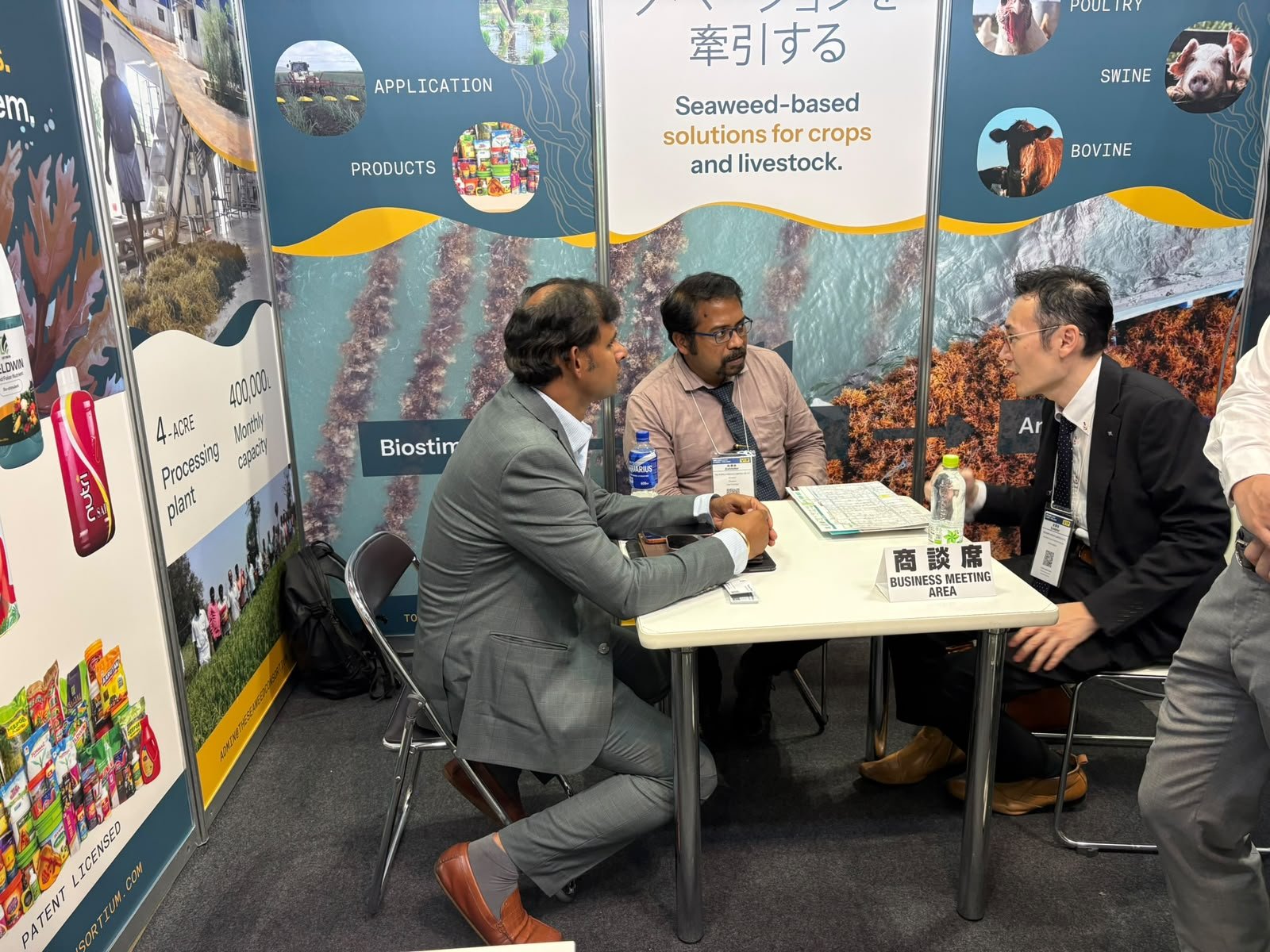
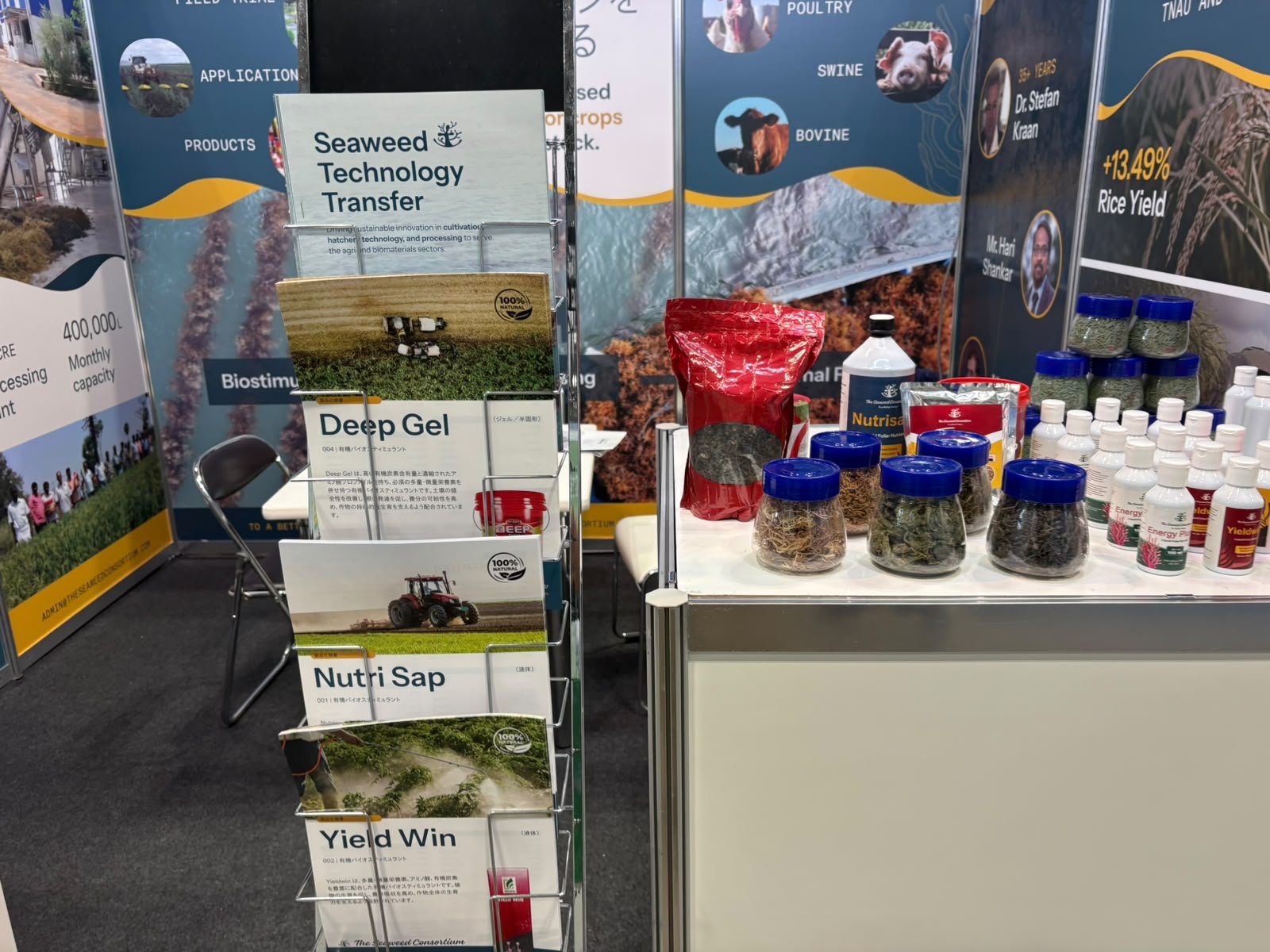
TSC participated at Booth 19 11, using the event as an opportunity to introduce its integrated approach to seaweed and explore the growing conversation around marine-based solutions for agriculture.
Beyond the coastline
Seaweed is often thought of simply as a marine crop. But its potential extends much further.
From cultivation and hatchery technology to processing, bio-stimulants and other downstream applications, seaweed can become part of a much larger value chain connecting the ocean with agriculture, food systems, biotechnology and materials.
This broader potential is at the centre of TSC's work. By developing capabilities across different stages of the seaweed ecosystem, TSC works towards creating practical applications that can make better use of this renewable marine resource.
J-AGRI provided an opportunity to bring that perspective into a market where conversations around agricultural productivity, sustainability and new technologies are increasingly important.
Why are we looking at seaweed for agriculture?
Agriculture is under pressure to produce more while using resources more efficiently.
This is creating interest in solutions that can complement existing farming practices — including biostimulants and other biological inputs that can support plant growth, nutrient efficiency, and resilience.
Seaweed contains naturally occurring compounds and nutrients that have attracted increasing interest for agricultural applications. When processed and formulated appropriately, seaweed-derived products can be developed into agricultural inputs designed to complement conventional crop-management practices.
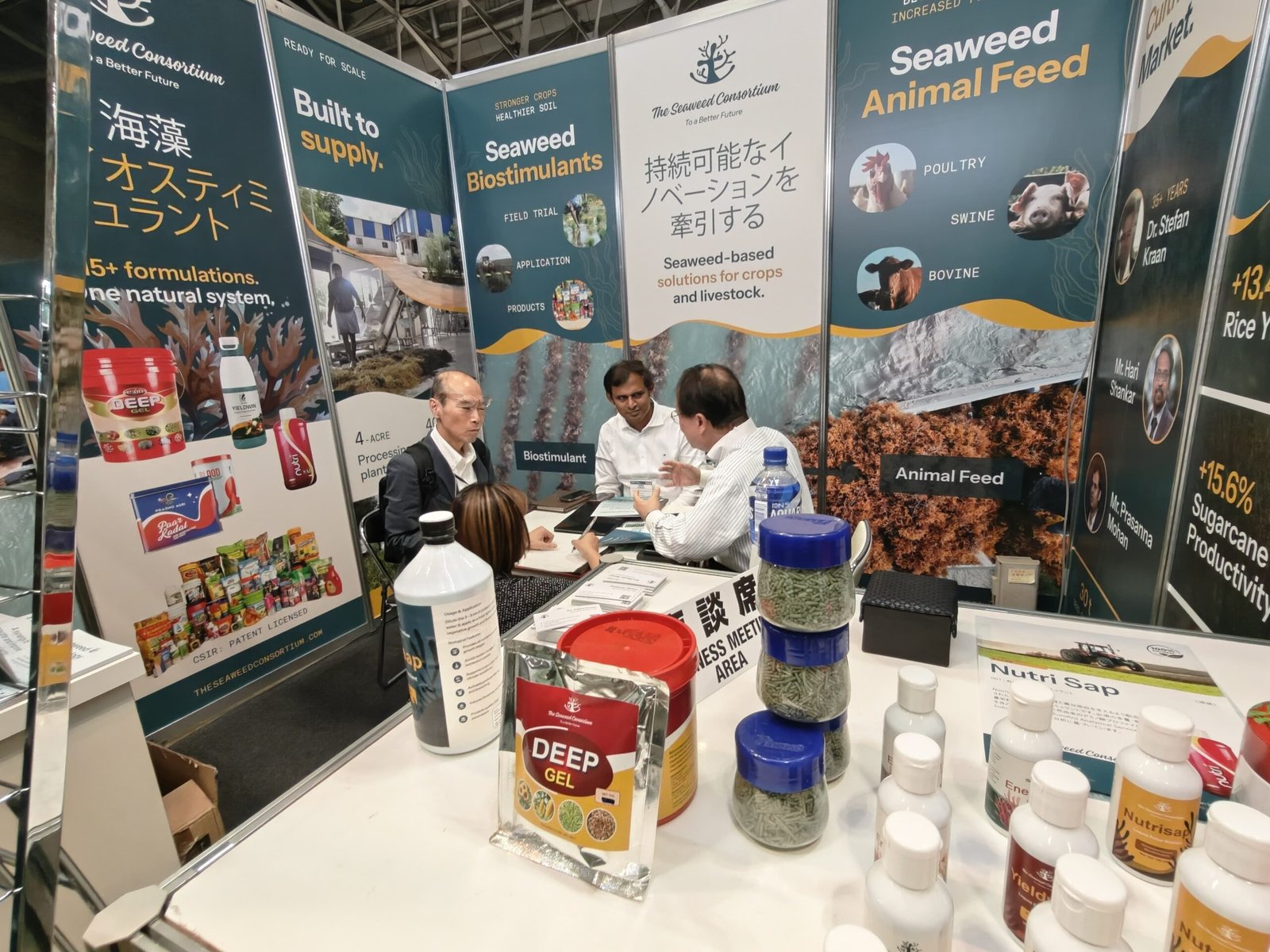
For TSC, this represents an important connection between marine resources and agricultural innovation. Its portfolio of seaweed-derived bio-stimulant formulations reflects this approach, with solutions developed for different agricultural applications.
From seaweed to solutions
One of the key ideas TSC brought to J-AGRI was that the future of seaweed is not limited to
harvesting or processing. It is about building the ecosystem around it.
That means looking at the entire journey:
Seed development → Hatchery → Cultivation → Processing →
Formulation → Application
Each stage presents opportunities for research, technology and innovation.
An integrated approach can also help create greater value from seaweed while supporting more efficient and responsible use of marine resources.
At J-AGRI, this wider perspective helped position seaweed not simply as a raw material, but as a platform for developing new solutions.
Conversations that matter
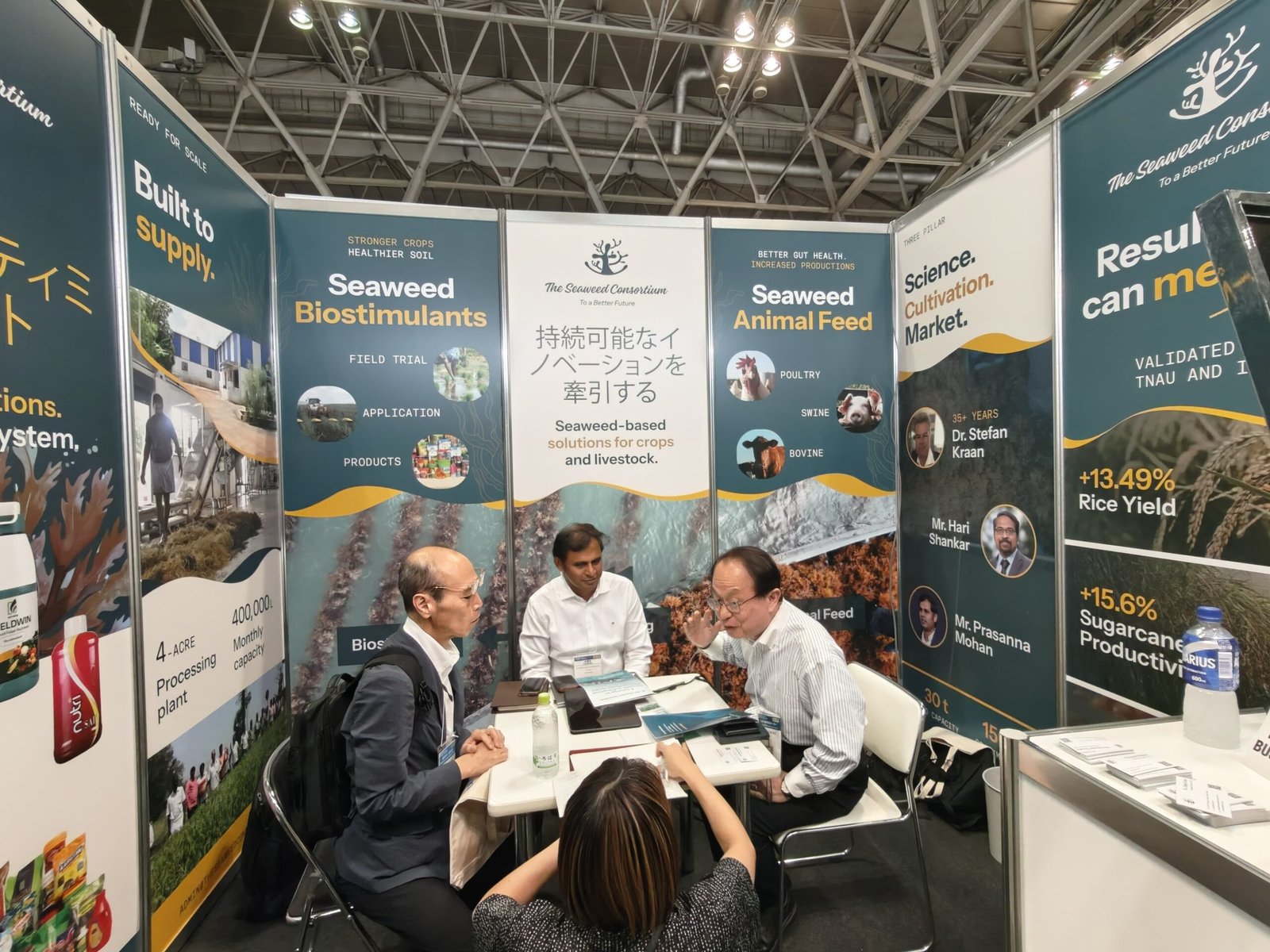
Events like J-AGRI are valuable not only because of the products on display, but because of the conversations that happen around them.
Bringing together people from different parts of agriculture creates opportunities to look at familiar challenges from new perspectives.
For TSC, participating in the exhibition was an opportunity to introduce its work to the agricultural community in Japan, share the possibilities of seaweed-derived solutions, and learn more about the questions and priorities shaping the market.
The interaction between marine biotechnology and agriculture is still an evolving space. And that makes these conversations particularly important.
Looking beyond the event
J-AGRI Tokyo 2026 was more than an exhibition for TSC. It was an opportunity to place seaweed within a larger conversation about sustainable agriculture, biological solutions, and resource-efficient innovation.
The event reinforced an idea that continues to shape TSC's work:
The potential of seaweed is much bigger than that of the sea.
From cultivation and hatchery technology to processing and agricultural applications, there is an opportunity to build a connected ecosystem around this renewable resource.
And as agriculture continues to look for new ways to work with nature rather than against it, seaweed has an increasingly interesting role to play.
Continuing the journey
The conversations started at J-AGRI are part of a much larger journey — one that connects science, cultivation, technology, and agriculture.
TSC will continue exploring how seaweed can create meaningful value across this ecosystem and contribute to more sustainable solutions for the future.