
Protein Transition and the Role of Seaweed

By Dr Stefan Kraan
The Seaweed Consortium, Tuticorin, Tamil Nadu, India
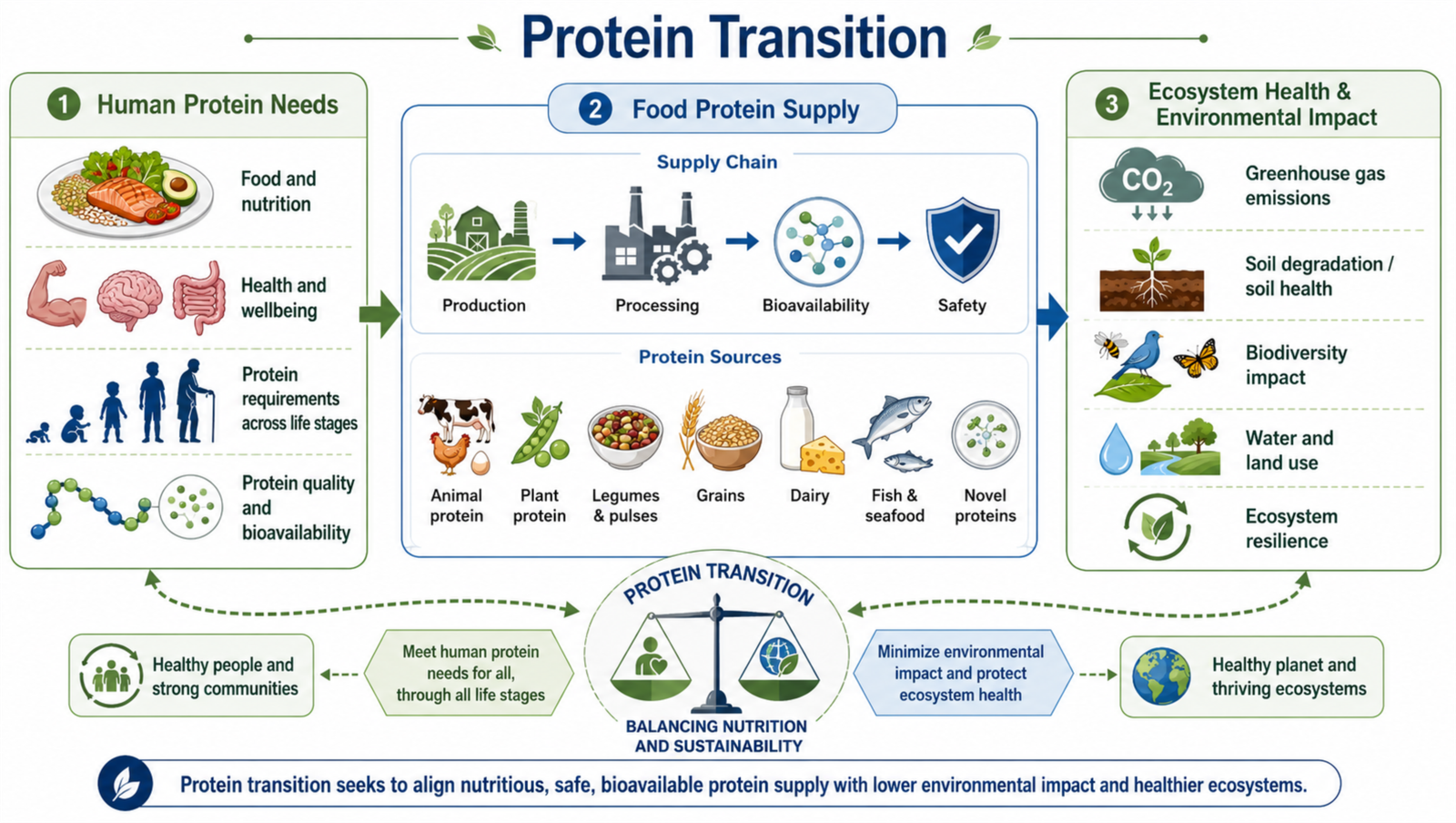
The protein transition refers to the shift from a food system that depends heavily on conventional animal protein, especially meat and dairy, towards a more diverse mix of protein sources. These include plant-based proteins, fermentation-derived proteins, cultivated meat, insects, algae, and seaweed. The goal is not necessarily to remove animal products completely, but to rebalance diets and production systems so that people can access enough nutritious protein without placing unsustainable pressure on the planet.
This transition is needed because the current global protein system creates several environmental, health, and food security challenges. Livestock production is linked to greenhouse gas emissions, land use, water use, biodiversity loss, and pollution from manure and feed production. The FAO (2026) has warned that demand for terrestrial animal products could rise by around 20% by 2050, which would make it harder to reduce emissions unless food systems change. The IPCC also states that healthier and more sustainable diets can reduce greenhouse gas emissions from food systems while improving health outcomes. Therefore, the protein transition is not only about climate change; it is also about building a food system that is more resilient, efficient, and fair. A protein transition has the potential to deliver 14 to 20 percent of the emissions mitigation the world needs until 2050 to stay below 1.5°C. (Paris Agreement; Nature Climate Change 2019). This amounts to 10 to 14 gigatonnes of CO2-eq per year of emissions mitigation compared to business as usual by 2050.
Another reason the protein transition matters is food security. As the world population grows, demand for protein will increase. Producing more protein in the same way as today would require large amounts of land and feed crops, which we do not have available unless we change land use practices in favour of animal production. This can create competition between growing food for humans and growing feed for animals. Alternative proteins can help reduce this pressure by producing protein more efficiently, often using fewer resources. A more diverse protein system is also less vulnerable to shocks such as droughts, animal disease outbreaks, supply chain disruptions, and rising feed and oil prices.
Seaweed fits into the protein transition because it offers a promising marine-based protein source. Unlike many land crops, seaweed does not need fertile soil, fresh water, or synthetic fertilisers to grow. It grows in the sea and can absorb nutrients from the surrounding water. Especially a good resource to help reduce eutrophication in coastal and nearshore waters and bays. This makes it attractive in a world where land and freshwater resources are under pressure and helps with nutrient recycling from runoff from land. Seaweed also contains useful nutrients, including protein, fibre, minerals, vitamins, antioxidants, and essential amino acids, although its protein content varies depending on the species and processing method (Pereira et al., 2024). In general, the protein content of seaweed ranges from 3% up to close to 40%, and considerable differences exist in the protein content of brown, green, and red seaweeds. In contrast to brown seaweeds, red seaweeds contain higher levels of protein, which can be up to 40% (Porphyra and Pyropia sp.), whereas brown seaweeds have protein levels of 10- 20% (e.g., Alaria esculenta), while levels found in green seaweeds range from 8% to as high as 29% (Ulva sp.) Differences in season, species, and environment (eutrophe areas) can have a significant impact on the composition of amino acids and protein in seaweeds (Holdt and Kraan 2011).
Seaweed can contribute to the protein transition in several ways. First, it can be eaten directly, as in sushi, soups, salads, snacks, and seasonings. Second, it can be processed into protein-rich ingredients for plant-based foods, such as burgers, seafood alternatives, noodles, sauces, and functional food products. Third, seaweed can be used in animal feed for gut health optimisation and improving general health. This means seaweed could support both alternative protein production and lower-impact animal farming (Thomas et al, 2025).
However, seaweed is not a perfect solution on its own. There are still challenges around taste, texture, consumer acceptance, large-scale farming, processing costs, and food safety. Some seaweeds can contain high levels of iodine or absorb heavy metals from polluted waters, so good regulation and careful sourcing are essential. Protein extraction from seaweed can also be technically difficult, and the industry needs more investment before seaweed protein can compete with established sources such as soy, peas, dairy, or meat. Recent research suggests seaweed-based proteins may have low environmental impacts and valuable nutritional properties, but more life-cycle assessment work is still needed to understand their full benefits and limitations (Schelte et al., 2025).
Concluding remarks
The protein transition is needed because the world must produce enough protein while reducing environmental damage, improving health, and strengthening food security. Seaweed fits into this transition as a sustainable, ocean-grown resource that can provide food, ingredients, and feed solutions. It will solve our problems and not replace all other proteins, but it can become an important part of a more diverse and resilient protein system. By combining seaweed with plant proteins, improved farming practices, and responsible innovation, society can move towards a food system that nourishes people while respecting planetary limits.
FAO (2026). https://www.fao.org/newsroom/detail/new-fao-report-maps-pathways-towards-lower-livestock-emissions/en?utm_source=chatgpt.com “New FAO report maps pathways towards lower livestock emissions”
IPCC (2026) https://www.ipcc.ch/srccl/chapter/chapter-5/?utm_source=chatgpt.com “Food Security — Special Report on Climate Change and Land – IPCC”
Pereira, L.; Cotas, J.; Gonçalves, A.M. Seaweed Proteins: A Step towards Sustainability? Nutrients 2024, 16, 1123. https://doi.org/10.3390/nu16081123
Thomas, JB.E., Xu, V.W., Krizsan, S.J. I. M. Aasen, A. Oliveira, H. Ramos,
P. Tyedmers, M. Hayes & F. Gröndahl (2025). Seaweed as a climate fix for meat and dairy production: an LCA perspective. Sci Rep 15, 32597 (2025). https://doi.org/10.1038/s41598-025-18322-1
Schelte, N., Vittoria De Luca Peña, L., Nachtergaele, P., Dewulf, J. (2025). Life cycle assessment of seaweed-based proteins – review of status, gaps, and recommendations,
Sustainable Production and Consumption, 61; 134-163 https://doi.org/10.1016/j.spc.2025.10.014.